

Compression Bra vs. Sports Bra: Which One Do You Actually Need?
Let's answer this clearly first: a compression bra and a sports bra are not the same garment, and after breast surgery, they're not interchangeable.
A compression bra supports healing. A sports bra supports movement.
One is built for what your body is going through. The other is built for what your body is doing.
If you've ever stood in front of a drawer full of sports bras thinking, "Surely one of these will work," - this one's for you.
What's the difference between a compression bra and a sports bra?
They can look similar. They don't behave the same way.
A compression bra is designed for recovery, after surgery, or for ongoing swelling like lymphedema. It applies gentle, even pressure across the whole chest to help manage swelling and keep healing tissue supported and still.
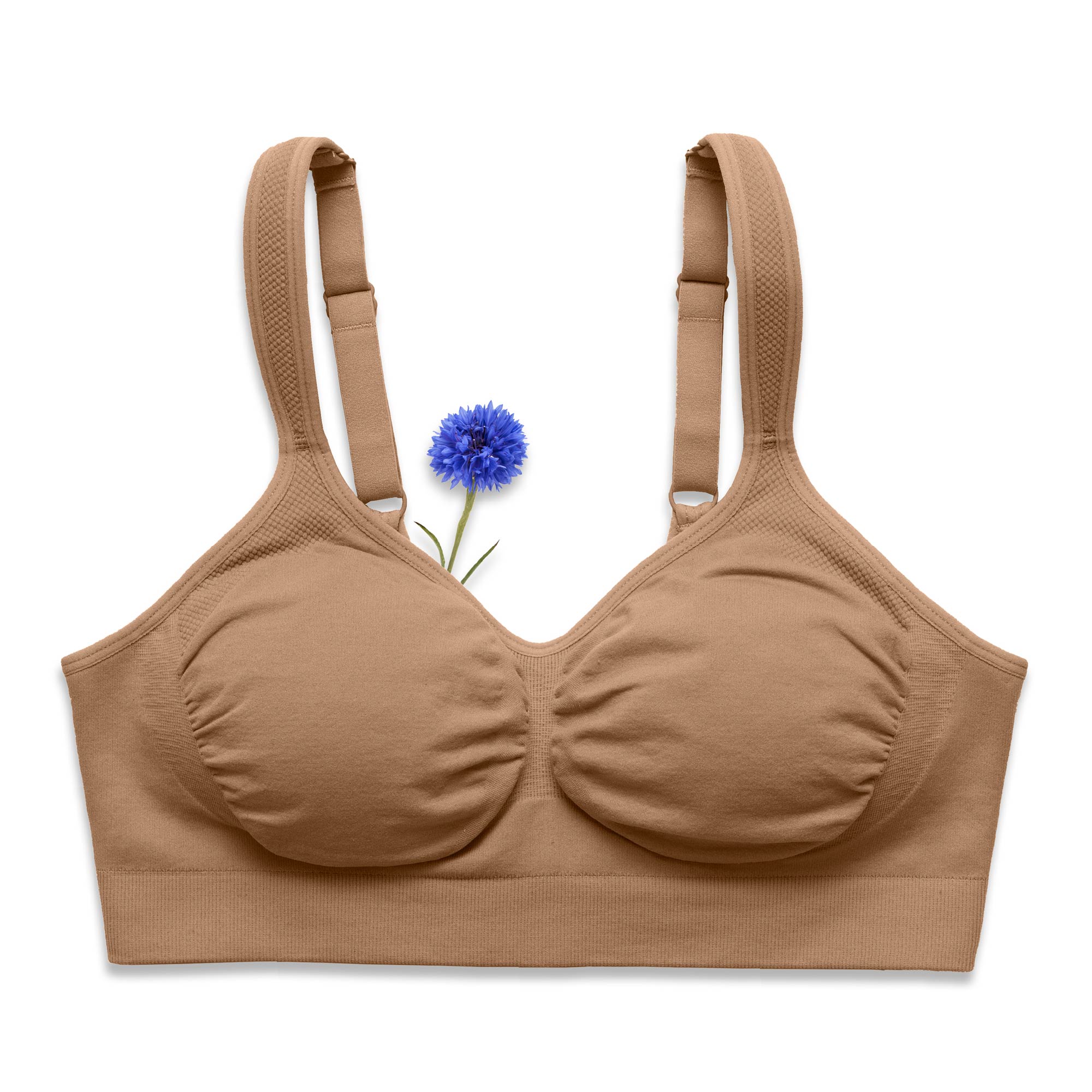
A sports bra is designed for exercise. Its job is to limit bounce while you move, for an hour, maybe two.
The differences show up everywhere once you know where to look:
- Purpose. Compression bras manage swelling and support healing. Sports bras manage motion.
- Wear time. Compression bras are made for all day, all night, for weeks. Sports bras are made for a workout.
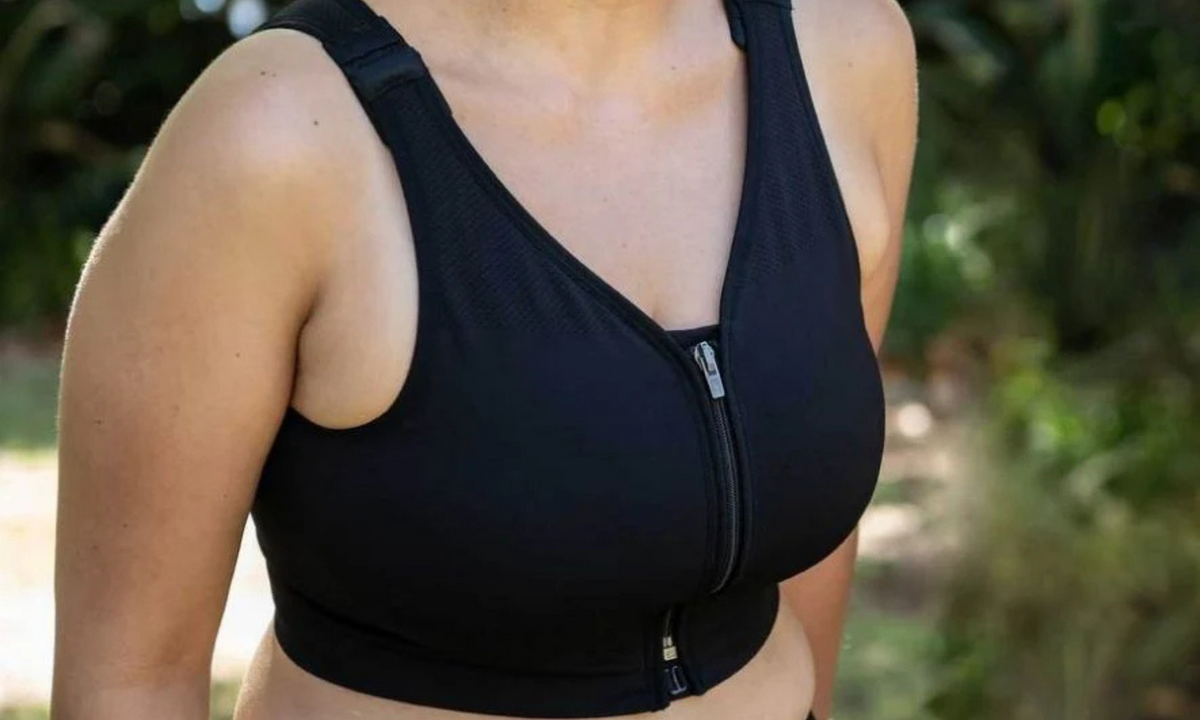
- Closure. Most compression bras open at the front, because raising your arms overhead after surgery isn't just hard, it's often not allowed. Most sports bras go on over your head.
- Pressure. A good compression bra spreads zoned compression evenly, with no wires, seams, or bands digging in. A sports bra concentrates its grip in the band and straps.
- Skin contact. Recovery skin is tender skin. Compression garments are built soft against incisions. Sports bras aren't thinking about incisions at all.
That's the key.
A sports bra holds you tight for an hour of movement. A compression bra holds you gently for weeks of healing.

Can I wear a sports bra instead of a compression bra after surgery?
We hear this one a lot, usually from folks staring at the scratchy garment the hospital sent home.
"Can't I just wear my sports bra? It's compressive. It's tight. It's basically the same thing… right?"
Not quite. And in the early weeks, the differences matter most.
Sports bras compress, but they don't adapt. They hold tight, but they don't support change, and your body changes a lot in the first weeks after surgery.
Here's what a sports bra can't do while you heal:
- It usually can't open at the front - and pulling a snug bra over your head with fresh incisions is somewhere between painful and off-limits.
- It isn't sized for swelling - recovery bodies fluctuate, sometimes daily.
- Its pressure isn't even - tight bands and seams can press exactly where you don't want pressure.
- It isn't made for 24-hour wear - and most surgeons recommend round-the-clock compression in the first weeks.
But here's the truth: this isn't about sports bras being bad. They're wonderful, at their actual job.
It's about asking one garment to do another garment's work, at the moment your body can least afford the compromise.
Whatever your surgeon recommends, a compression bra, a surgical bra, a post-op bra, follow their plan. Different names, same idea: even, gentle, adjustable support while you heal. If you want the full timeline, we've walked through how long to wear a compression bra after surgery week by week.
When can I switch from a compression bra to a sports bra?
This is the question everyone wants a date for.
The honest answer: your surgeon sets the date. But here's the shape most recoveries take.
- Weeks 1–6: compression, day and night. Most surgeons recommend round-the-clock wear while swelling is doing its loudest work.
- Around weeks 4–6: many folks are cleared to taper, daytime compression, easier nights, light activity like walking.
- After clearance: higher-impact exercise comes back gradually, and with it, the sports bra, often with a compression layer still in rotation for longer days.
Three things to wait for before you switch:
Your surgeon's okay.
Swelling that has genuinely settled.
Incisions that are fully closed and calm.
And when you do switch, ease in. Many folks alternate for a while: sports bra for the workout, compression bra for the rest of the day.
Your body will tell you which one it wants. Listen to it.
What is a compression sports bra, and do I need one?
Here's where the whole "versus" question gets more interesting.
Because some bras genuinely are both.
A compression sports bra uses firm, even, all-over pressure, instead of underwires and rigid cups, to limit movement during exercise. For a lot of folks, that's not a compromise. It's the point:
"No wires digging in."
"Nothing pressing on one spot."
"I can actually breathe in it."
They tend to shine in two situations:
- 1. Returning to movement after surgery or with lymphedema, when you're cleared for activity but still want gentle, even support you trust.
- 2. Fuller busts - where all-over zoned compression can feel steadier and kinder than straps and bands working overtime. We wrote more about that in our guide to compression bras for large breasts and plus sizes.
If your workouts are high-impact - running, HIIT, anything bouncy, look for a compression sports bra designed for it, like the HuggerLUMA, built for higher-impact movement with fuller busts in mind. You can see the whole movement-ready lineup in our active collection.
One garment for the gym and the healing, the errands and the couch.
That's the shift.

How should each one fit?
Different jobs, same rule: snug is right, painful is wrong.
A compression bra should feel like a firm, even hug, everywhere at once, nowhere in particular. You should be able to breathe deeply, sleep, and forget about it for stretches. Numbness, tingling, or marks that don't fade mean it's too tight. Here's how to tell if your compression bra fits correctly.
A sports bra should hold you firmly through movement, jump, jog in place, reach, without the band biting or the straps carving your shoulders.
And if you've had surgery recently, that "how tight should it be?" instinct is a good one. Tighter is not better. Tighter is just tighter.
Even, gentle, consistent, that's what healing tissue wants.
Where Prairie Wear fits in
We built Huggers because folks kept telling us the same thing: nothing worked. The hospital garment was scratchy. The sports bra was a battle to get into. Nothing was made for the whole recovery.
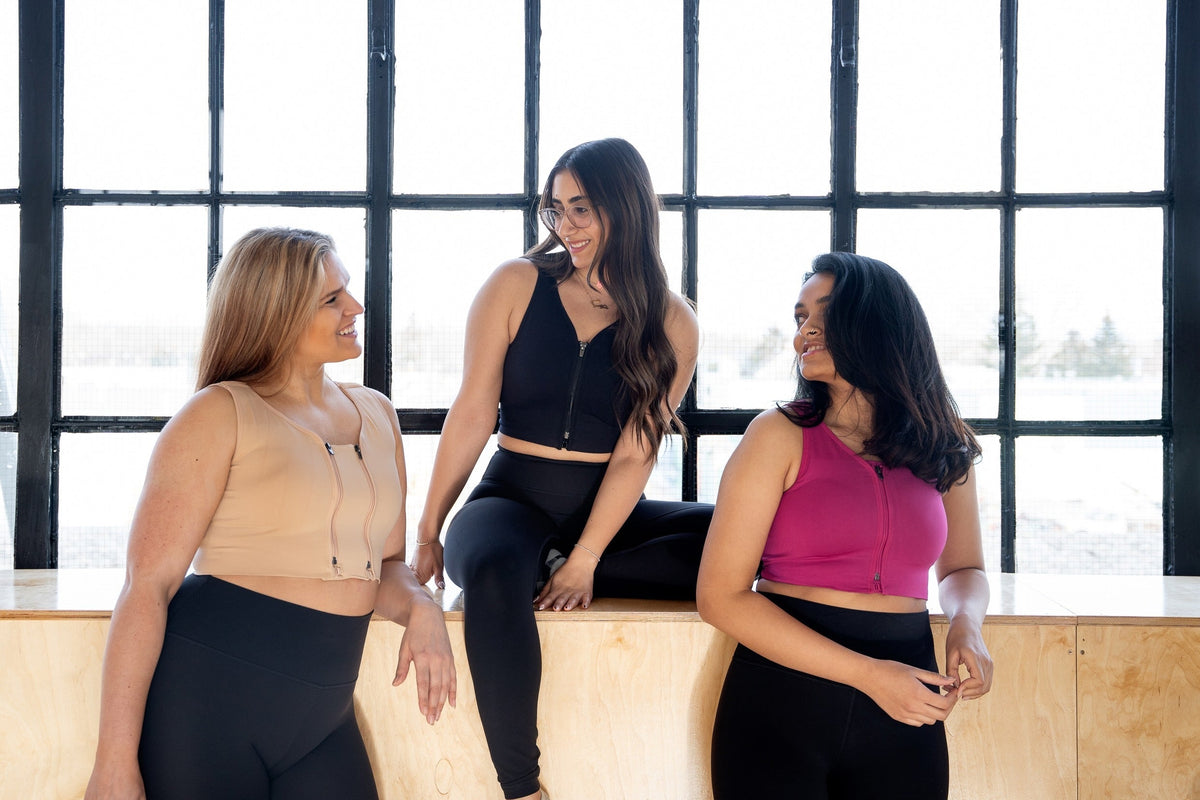
So we made compression bras you can actually live in:
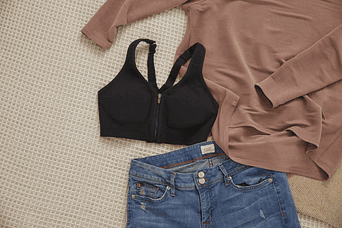
- Front-zip - no overhead struggle
- 360° Zoned Gradient Compression - even support, no pressure points
- Wire-free, latex-free, velcro-free
- OEKO-TEX® STANDARD 100 certified skin safe
- Designed for 24-hour wear
- Just ONE Measurement to find your size
From first-phase recovery to lymphedema care to getting back to the gym, there's a Hugger for each stage, you'll find them all in our medical collection, and our fit guide will point you to the right one in about a minute.
If you're between sizes or between stages, reach out, Team Prairie will help.
Common questions
1. Is a sports bra the same as a compression bra?
No. Some sports bras use compression to limit bounce during exercise, but a true compression bra is a recovery garment, designed for even, gentle, all-day pressure, front closure, and sensitive healing skin.
2. Can I wear a sports bra instead of a compression bra after surgery?
Not in the early weeks, unless your surgeon specifically says so. Sports bras usually lack front closures, adaptable sizing, and even pressure, the exact things healing tissue needs.
3. When should I switch from a compression bra to a sports bra?
When your surgeon clears you, commonly somewhere after the 4-to-6-week mark, once swelling has settled and incisions have healed. Ease in, and keep the compression bra in rotation for longer days.
4. Can I exercise in a compression bra?
Light activity like walking, usually yes, it's designed for all-day wear. For higher-impact exercise, wait for your surgeon's clearance and consider a compression sports bra built for movement.
5. Do compression bras flatten your breasts?
No, a well-fitted compression bra applies even, zoned pressure to support tissue and manage swelling. It should feel like a firm hug, not a press.
6. What's the best option for larger busts?
Many folks with fuller busts find all-over zoned compression steadier and more comfortable than underwire or strap-heavy sports bras, for both recovery and exercise. A compression sports bra like HuggerLUMA covers both.
One last thing
You don't have to choose your bra by squinting at labels.
Choose it by the job you need done.
Healing? Compression bra.
Sweating? Sports bra.
Both, at different hours of the same day? That's real life, and there's a garment for that too.
Find your fit. Feel the difference. Support that shows up through recovery and beyond.
The information here is general guidance, not medical advice. Always follow your surgeon's or care team's instructions for your recovery.
Disclaimer:
This article is for educational and informational purposes only and is not intended to replace medical advice, diagnosis, or treatment. Always consult your healthcare professional with any questions about your individual recovery or compression needs. If your medical professional has any questions about Prairie Wear Huggers, we'd love to connect. We're all about creating communities of support here at Prairie Wear. 💛