

Article: Why Does My Post-Surgery Bra Hurt? 7 Reasons and How to Fix the Fit
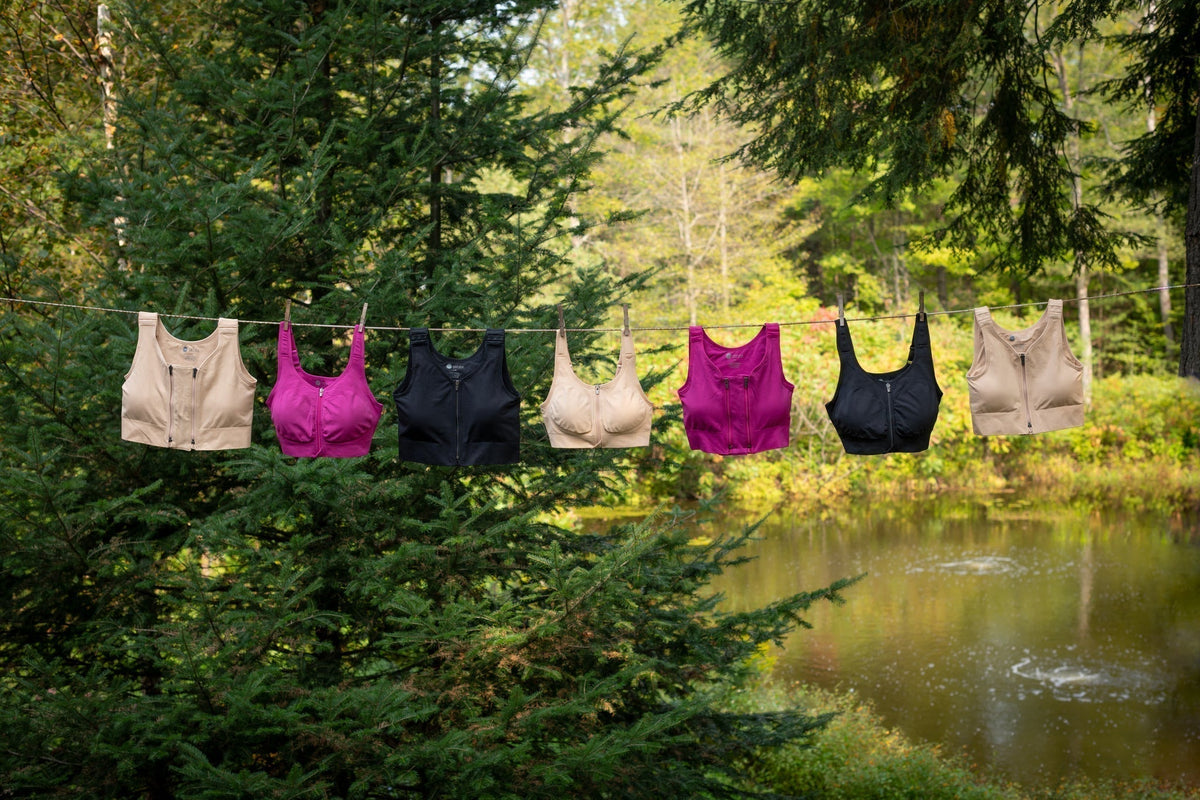
Why Does My Post-Surgery Bra Hurt? 7 Reasons and How to Fix the Fit
A post-surgery bra should feel snug, never painful. If yours digs, rides up, leaves marks that don't fade or makes you count the hours, that's a fit problem, not something to put up with and it usually comes down to one of seven things.
Compression only works if you actually wear it, so a bra you dread isn't doing its job. Always follow your surgeon's guidance first.
The bra you were sent home in has somehow earned a reputation for being something you just have to put up with.
Straps that dig. Bands that roll. Seams that rub. Compression that squeezes in one place and leaves another unsupported. A bra you can't wait to take off the second you get home.
But discomfort shouldn't simply be part of recovery.
Your body moves. It changes. In the weeks after surgery it may swell, heal, fluctuate and recover, and it may look different from one day to the next. Your bra should be designed to work with that reality not fight against it.
At Prairie Wear, we believe support should feel exactly like that: support.

So if you're constantly adjusting your surgical bra, counting the hours until you can take it off or wondering whether "this is just how post-op bras feel," here are seven reasons yours might not actually be working for you.
1. Your Post-Surgery Bra Feels Too Tight
There's a big difference between supportive and restrictive.
A supportive bra should feel secure around your body without making it difficult to breathe, creating painful pressure points or making you want to rip it off halfway through the day.
This is especially important when you're wearing compression.
Compression should feel like an even, secure hug around the body not like one area is being squeezed while another is left unsupported.
How tight should the band be after breast augmentation, reduction or reconstruction?
Snug enough that nothing shifts or pulls when you move, loose enough that you can still take a full, deep breath. If you're recovering from surgery or managing a medical condition, always follow the compression recommendations of your healthcare provider, their timeline and their pressure guidance are the ones that count.
And no, sizing down doesn't give you more support. Support comes from the way a bra is built, not from squeezing harder. A too-small compression bra digs, restricts breathing and leaves marks.
At Prairie Wear, we also recommend giving your body a little time to adjust to mapped compression. Our 30-minute fit test lets you assess how your Hugger feels after your body has had a chance to settle into it.
The Prairie Wear rule: snug is good. Painful is not.
2. Your Underwire Is Digging, Poking or Pinching or You're Back in One Too Soon
Underwire can create structure, but it can also create concentrated pressure exactly where you don't want it.
A wire may press into your ribs, breast tissue or sensitive areas of the chest. And for anyone recovering from breast surgery, undergoing treatment, managing lymphedema or dealing with sensitive tissue, those pressure points can be particularly unwelcome.
When can you go back to an underwire bra after surgery? Most surgeons ask you to stay out of underwire until your incisions have fully healed and they've cleared you, for many people that's somewhere between six weeks and a few months after a breast reduction or augmentation. But healing isn't a calendar, and the only timeline that counts is your surgeon's.
That's one of the reasons every Prairie Wear Hugger is wire-free.
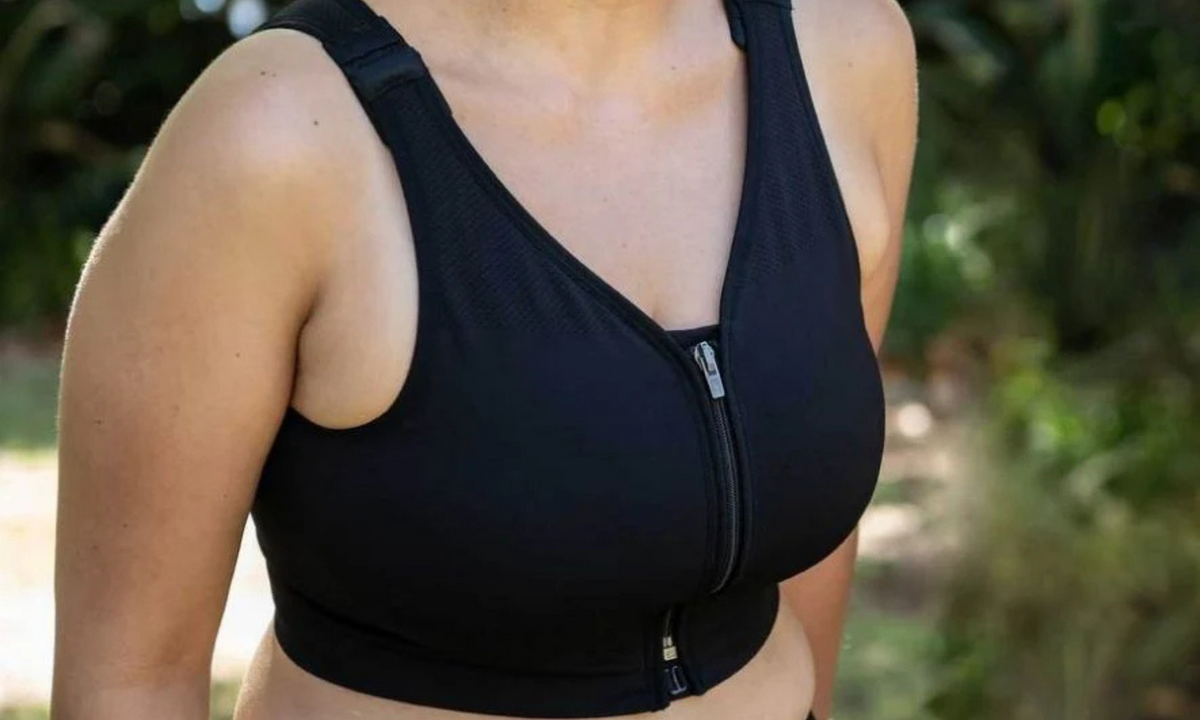
Instead of relying on a rigid wire for support, Prairie Wear uses seamless construction and mapped compression to create support around the body. Our Huggers are also made without latex or Velcro, eliminating even more potential irritation points.
Support doesn't have to come from something hard.
3. Your Straps Are Doing All the Work
If you finish the day with deep strap marks on your shoulders, your straps may be compensating for a bra that isn't supporting you properly elsewhere.
A good bra works as a system - the band, straps and body of the garment should distribute support instead of hanging everything from two narrow points. Constantly tightening the straps usually isn't the answer, and after surgery it can pull directly on tissue that's still healing.
We've written a full fit check for this how to tell if your compression bra fits correctly covering straps, bands and what a good fit should actually feel like.
Your shoulders shouldn't have to carry the whole load.
4. You're Constantly Spilling, Gaping or Adjusting
Bodies aren't perfectly symmetrical.
And for people who have experienced a lumpectomy, mastectomy, reconstruction or lymphedema, asymmetry and fluctuation can be an everyday reality. One side may swell while the other settles. Shape can change week to week as healing progresses. Add a drain, a swell pad or a prosthetic and it changes again.
So why are so many bras constructed as if our bodies stay exactly the same?
If you're constantly tucking yourself back into a cup, dealing with gaps or trying to reposition your bra throughout the day, it may not be the right shape or style for your body right now.
Prairie Wear Huggers are designed to work with the body's unique contours and accommodate realities such as asymmetry, swelling and changing breast shape. Removable pads mean the HuggerPRIMA can be worn flat against the chest after a mastectomy, and the pockets hold ice packs, swell pads or a prosthetic.
Because your body shouldn't have to conform to your bra.
Your bra should adapt to you.
5. The Band Rolls, Rides Up or Moves Around
Your bra band plays a huge role in support.
If it rides up your back, rolls underneath your breasts or shifts every time you move, the fit or the construction may not be right.
After surgery this matters more than usual. A band that rolls creates a tight ridge exactly where you least want one, and a thick elastic band low on the ribcage can act like a tourniquet restricting rather than supporting, which is the opposite of what compression is meant to do.
The goal is consistent, comfortable contact around the torso.
That's why Prairie Wear uses 360 zoned, gradient compression rather than relying on one tight elastic band to do the job. The support is designed around the garment instead of being concentrated in one place.
Think even support, not one band squeezing your rib cage.
6. Finding Your Size Feels Like Doing Algebra
Band size. Cup size. Sister size. Add four. Subtract something else.
And then somehow the exact same bra size fits completely differently depending on the brand, which is the last thing you need in a recovery week.
We thought there should be an easier way.
Prairie Wear Huggers use one measurement, taken above the chest and directly under your arms, to determine your Hugger size. That's it. No cup-size equation.
There are a few additional fit recommendations, people with a DD+ cup may need to size up in certain Hugger styles and you'll find all of them in Find Your Best Fit.
One body. One measurement. One place to start.
7. Your Bra Can't Keep Up With Your Body
Maybe your bra fit perfectly six months ago.
Or last month.
Or even last week.
Bodies change.
And during post-surgical recovery in particular, they can change quickly. Swelling can increase and decrease. Bandages can be added or removed. Drains come out. Breast shape can change as healing progresses.
This is the reason so many people end up with a bra that felt right on day three and unbearable by day ten. Nothing has gone wrong, your body has simply moved on, and the garment hasn't.
That doesn't necessarily mean you should need a completely different bra every time your body changes.
Prairie Wear's PrimaEXTENDER and VidaEXTENDER were created to add flexibility to the fit of the HuggerPRIMA and HuggerVIDA. They zip in to accommodate changes including swelling, bandaging and changing compression needs - so the same bra can carry you through the swelling weeks instead of being replaced halfway through them.
And as recovery settles and you need less compression than you did in week one, a lighter everyday option like the HuggerVIDA is often the natural next step.
Because a bra designed for real bodies needs to acknowledge one important fact:
Real bodies don't stay exactly the same.
When Discomfort Is a Reason to Call Your Surgeon
Most post-surgery bra discomfort is a fit problem. Some of it isn't.
Please contact your surgical team, don't wait for your next appointment if you notice:
- numbness, tingling or pins and needles that doesn't ease when you take the bra off
- skin that looks pale, dusky, red or unusually warm under the garment
- marks, indentations or welts that don't fade within an hour or so
- difficulty taking a full breath, or shortness of breath
- pain that is getting worse rather than easing as the days pass
- new or rapidly increasing swelling, or fluid that keeps returning
- any discharge, odour or opening at an incision
None of this is a reason to stop wearing compression on your own. Your surgeon may want to adjust the fit, the garment or the schedule—but that's their call to make.
What Should You Look for in a Post-Surgery Bra?
If your current bra is failing one or several of the tests above, here's what we believe matters most.
Wire-free support. Support doesn't have to mean underwire. Look for bras that create structure through thoughtful construction, fabric and compression rather than rigid wires pressing into healing tissue. Every Prairie Wear Hugger is wire-free.
Support that is distributed around your body. One tiny elastic band shouldn't be responsible for everything. Prairie Wear Huggers use 360 zoned, gradient compression designed to create a secure, consistent feeling around the torso. We call it a Hugger for a reason.
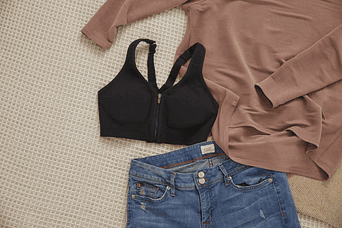
Front-opening. After breast surgery, reaching behind your back to fasten a bra may not be possible for weeks. A front zip you can manage one-handed, on your own, matters more than almost anything else in the first fortnight.
A fit that accounts for real bodies. Your bra should work with asymmetry, changing breast shape, swelling, movement, different life stages, recovery and simply being human. We shouldn't have to engineer our bodies to fit our bras.
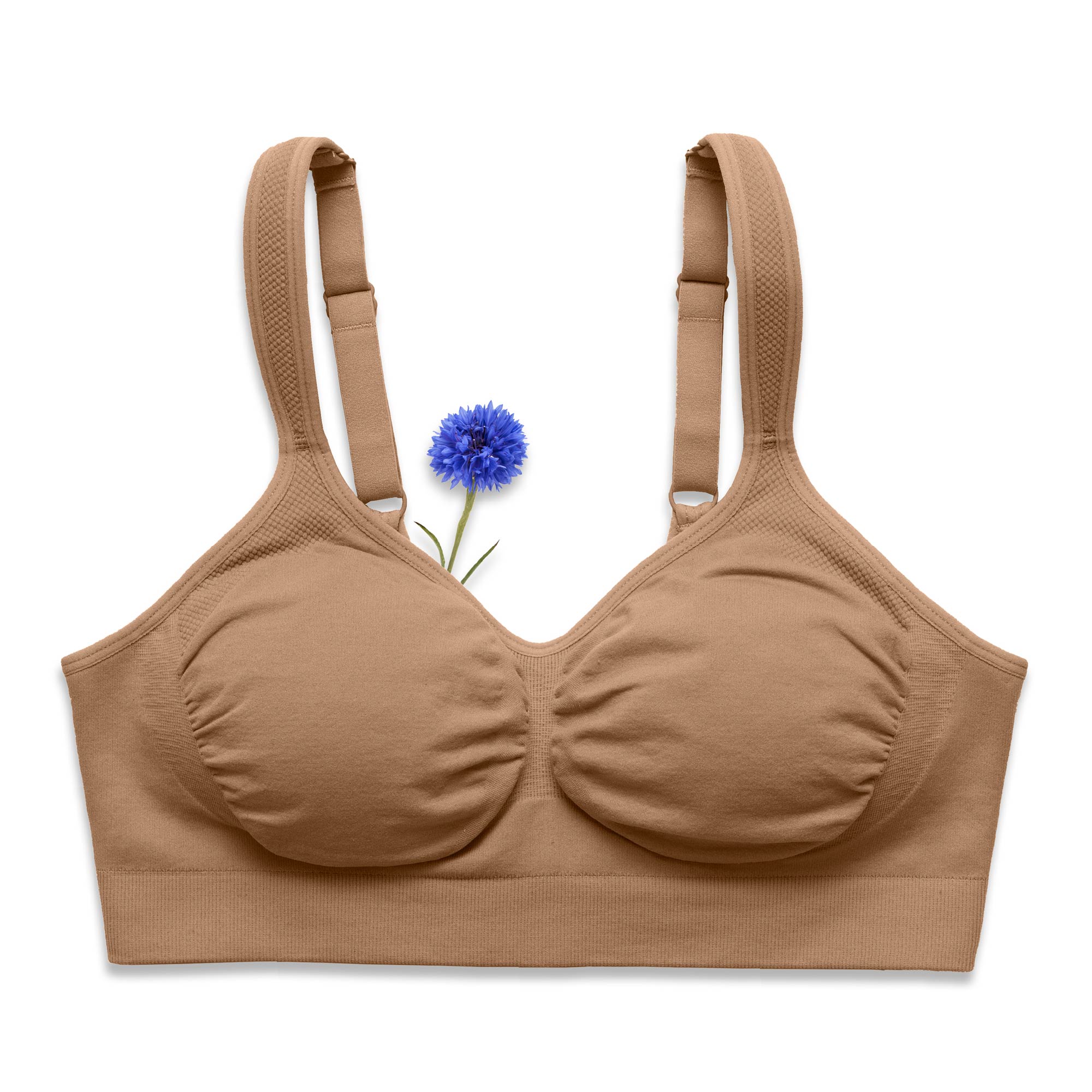
Seamless construction. Every seam is another potential point of friction. Seamless construction creates a smoother garment that can move and stretch with the body while reducing unnecessary irritation points. For sensitive post-surgical skin, less rubbing is a very good thing.
Skin-friendly materials. If you're going to wear something against your skin for hours or, in the early weeks, day and night—materials matter. Prairie Wear Huggers are OEKO-TEX® certified and designed with skin comfort in mind.
The right support for what you're doing. There is no single "best bra." There is the right bra for what your body needs today. That may mean more compression and coverage during post-surgical recovery or lymphedema management. It might mean support designed for movement and exercise. Or it might mean softer, everyday compression for work, travel, maternity, nursing or simply living your life. That's why the Prairie Wear Hugger Collection includes different levels of support for different stages and activities—from the HuggerPRIMA for higher medical compression through to everyday and active options including the VIDA, LUMA and ARIA.
Common Questions
How tight should my bra band be after breast augmentation?
Snug enough that the band doesn't shift or ride up when you move, loose enough that you can take a full, deep breath comfortably. It shouldn't leave marks that stay put after you take it off. Your surgeon's guidance always comes first, some procedures call for firmer compression than others.
My surgical bra hurts. Is that normal?
Some tenderness and awareness of the garment is normal in the first days. Pain is not. If your bra digs, pinches, presses on an incision or makes you count the hours, that's a fit problem worth solving, compression only helps if you actually wear it.
When can I wear an underwire bra after a breast reduction?
Not until your incisions have fully healed and your surgeon has cleared you. For many people that's somewhere between six weeks and a few months, but it varies a great deal by procedure and by person. Ask at your follow-up rather than going by a calendar.
How long do I wear a compression bra after surgery?
For most breast surgeries, around the clock for the first four to six weeks, then during the day for a few weeks while swelling settles. We've written the full week-by-week picture here: how long to wear a compression bra after surgery.
Should I size down for extra support?
No. Support comes from the bra's design, not from going tighter. A too-small compression bra doesn't support more - it digs, restricts breathing and leaves marks.
Can I sleep in it?
Yes and in the early weeks most surgeons recommend it. Swelling doesn't pause overnight, so your support shouldn't either. More on that here: can you sleep in a compression bra?
Your Bra Should Support Your Recovery, Not Interrupt It
You shouldn't spend your day thinking about your bra.
You shouldn't be constantly pulling it down, pulling it up, adjusting a strap, repositioning your breasts or waiting for the moment you can finally take it off.
And if your body is healing or changing, you certainly shouldn't have to fight with your bra along the way.
We created Prairie Wear because we believed bras could do better.
Better support.
Better adaptability.
Better comfort.
For real bodies, real movement, real recovery and real life.
Compression that feels like a hug. Made to move with you.
Disclaimer:
This article is for educational and informational purposes only and is not intended to replace medical advice, diagnosis, or treatment. Always consult your healthcare professional with any questions about your individual recovery or compression needs. If your medical professional has any questions about Prairie Wear Huggers, we'd love to connect. We're all about creating communities of support here at Prairie Wear. 💛